Showing posts sorted by relevance for query oil-industry. Sort by date Show all posts

Latin American Social Issues

The
Latin American Social Issues

The recent history of Latin America is a story of profound political and economic change. During the second half of the 20th century, Latin America witnessed a transformation of society as the region struggled to find itself in the face of modernity and economic expansion.

Crushing poverty facilitated alternative forms of religious faith that spoke to the condition of many Latin Americans. Migration from the countryside to the city and north to the United States spoke to a yearning for a better life.

A thriving drug trade centered on a global market employed organized violence against national governments that tried to curb the trade. Centuries of oppression led to an organized and influential indigenous movement that mobilized to demand Indian rights and autonomy.

TheThe

Latin American countries plunged into the uncertainty of the oil industry with the hopes of increased revenues and instead found unpredictable results and mixed blessings. These factors offer a window into the dramatic social transformation of Latin America from 1950 to the present.

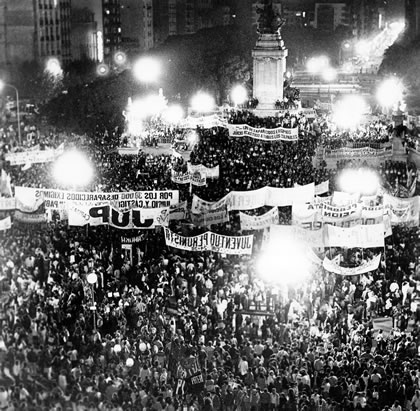
Latin American spirituality underwent profound changes in recent history. Liberation theology spoke to a new turn in the role of the Catholic Church in Latin America, although it was not a phenomenon unique to the region. For centuries, the church stood as a conservative element in association with the state; the church legitimized authoritarian rule.

However, beginning in the 1960s, many priests, nuns, and lay workers drew on their personal experiences working with the poor to question the responsibility of the church in the unequal distribution of wealth in Latin America.

Some Latin American theologists began to speak of the role of the church and Christians in helping the poor, a mission clearly laid out in the Bible. Liberation theology is an understanding of the Christian faith developed out of the suffering and social injustice experienced by the poor.

As such, it is a critique of society and the ideologies supporting the dominant hegemony, including the traditional role of the Catholic Church. It gave the poor a voice and created new forms of community-based activism. Liberation theology was a formidable force in Latin America for a few decades—especially in Central America, Brazil, and Chile.

Liberation theory gained momentum in 1968 when a group of 130 Latin American bishops met in Medellín, Colombia to discuss the church and its relationship to the populace. The bishops promoted an empowering education jadwal for illiterate rural peasants that affirmed the dignity and self worth of the students. This education was carried out in small community-based groups where people could gather together to read the Bible and discuss its relevance to their lives without a priest or church building.

Engaging Catholicism without a priest represented a new idea. Rural priests often served thousands of parishioners and could only visit some communities once a year. Priests, nuns, and lay people used the Medellín conference as a springboard for a new approach to their work with the poor.

Those Catholic personnel dedicated to the poor quickly learned through their charitable work that the condition of the lowest classes of Latin American society could only be relieved through sweeping structural changes. This would involve direct political action.

Some base communities served as the vehicle for political action as participants experienced an awakening, or consciousness-raising about their devalued position in society. Many Christian-based communities served not only as sites of literacy education and Bible study but also places where a reinterpretation of traditional religion promoted a transformative perspective on the world.
The
Latin American Social Issues

Some groups worked toward improvements in local basic services, such as healthcare and transportation. In spite of this, base communities represented a small fraction of Catholics, and by the 1980s, enthusiasm for liberation theology waned.

Protestantism is a relatively new player in Catholic Latin America. Brazil is home to Latin America’s largest Protestant community with half of the region’s estimated 40 million Protestants, but Central America boasts the largest number of evangelicals in terms of the percentage of the population.

European migration to the continent brought the traditional Protestant churches, such as German Lutheranism and British Anglicanism. Despite the influence of European immigrants, North American missionaries bear the responsibility for the tremendous growth in Protestantism in Latin America, especially evangelical forms like Pentecostalism.

Sharing liberation theology’s sense of consciousness-raising, Pentecostalism allows participants a refuge from suffering and social injustice by providing a spiritual space in which believers can regain some feeling of control over their lives.

Additionally, unlike Catholicism and mainstream Protestantism, Pentecostalism permitted anyone to become a spiritual leader, even the illiterate and poverty stricken. Women, in particular, have been attracted to evangelical churches due to their inclusive nature.

Evangelicalism has taken hold throughout the wartorn countries of Central America, especially in rural areas. In Guatemala rural Mayan women, mostly widows, fill evangelical churches in search of a sense of community that has been lost. These churches provide a network of support that replaces destroyed kinship ties. Protestant churches offer a religious alternative and a message of hope to the underdogs of society.

For women, the evangelical Protestant ban on drinking alcohol makes Protestant husbands an attractive marriage partner. In addition, the phenomenon associated with Pentecostalism in particular, such as speaking in tongues and faith healing, has given women positions of power within their religious communities.

Despite North American origins, evangelical Protestantism in Latin America is a unique phenomenon. Its churches emphasize the notion of community and belonging more than its northern counterparts. In addition, in Latin America being an evangelical does not necessarily denote a right-wing conservative political identity as it tends to in North America.

Latin America’s economic setbacks have not only influenced new religious movements but have also led to mass migrations of people. Latin Americans have moved from the countryside to the city and from Latin America to North America. Prior to the 1930s the majority of Latin America’s population resided in rural areas.

The global economic depression of the 1930s dealt a hard blow to the Latin American export economy, and rural residents began to leave the countryside. This exodus peaked over a 30-year period from 1950 to 1980 and succeeded in transforming Latin America’s social structure from predominantly rural to overwhelmingly urban.

By 1980 family-based farming was no longer viable as market-oriented modern agribusiness became the norm. Thousands streamed into Latin America’s major cities in search of industrial jobs and a better life. Women comprised a majority of the rural-urban migrants, as industrialization opened many jobs for female workers. Rapid urbanization quickly outpaced housing, basic services, and job markets.

Rural residents arrived in the cities to find dirty, disease-ridden, and overcrowded shantytowns with spotty electrical power and water shortages. Rural-urban migration caused a labor surplus, which led to the rise of a vast informal sector of the economy consisting of street vendors, rubbish scavengers, and prostitutes.

Latin Americans also migrated north to the United States for economic, political, and social reasons. Mexicans currently represent the greatest percentage of Latin Americans immigrating to the United States.

They often have come looking for work, and many resided in the south-west long before it belonged to the United States. During the 19th century and the beginning of the 20th century, Mexicans and Mexican Americans routinely crossed back and forth over the border, with little or no regulation.

During the 1930s, the government supported the repatriation of Mexican workers to provide more jobs for Americans. However, with the onset of World War II, labor shortages fueled the Bracero Program, which allowed Mexican agricultural workers to come into the country on a temporary basis. The Bracero Program lasted until 1964.

The Immigration Reform and Control Act of 1986 called for penalties for those hiring undocumented workers, but also granted amnesty to many undocumented immigrants already living in the United States. The Immigration Act of 1990 favored the legal immigration of family members of U.S. citizens and permanent residents.

Cuban Immigrants

Many Cuban immigrants came to the United States fleeing a repressive political regime. Cubans enjoyed a privileged status in relation to other Latin American immigrants due to the U.S. foreign policy on Cuba. As early as 1960 the U.S. government had created a special center for Cuban refugees, and their path to legal residence in the United States was easily cleared.

These first waves of immigrants represented the Cuban elite and middle class and individuals and families with financial resources, specialized job training, and American connections. In 1980 Fidel Castro opened the door for Cubans to leave the island, and a deluge of mostly male semi- and unskilled workers flowed into south Florida.

This migration overwhelmed U.S. authorities, and many of the refugees were placed in detention camps for months. Currently U.S. officials observe a quota on Cuban immigrants, but the Cuban-American community continues to thrive and grow.

Central Americans also have migrated to the United States seeking refuge from wars and violence that have disrupted the economy and everyday life, especially in El Salvador and Guatemala. In the 1980s migrants from El Salvador left their homes due to civil war and political repression.

Unlike Cubans fleeing political repression, many Salvadorans were denied permanent residency and deported. Churches in the U.S. southwest developed a “sanctuary movement” to protest U.S. treatment of these refugees, providing a safe haven for those fleeing violence.

In the 1990s a small minority of Salvadoran immigrants brought violence to the United States in the form of street gangs. Many of these gang members were targeted by U.S. immigration officials in Los Angeles, California, and sent back to El Salvador.

Not only are Latin Americans moving north, Latin America drugs are making the trip as well. One of the largest social problems facing Latin America is drug traficking, especially in Bolivia, Colombia, and Peru. The drug trade embodies simple supply and demand economics.

This multinational drug trade negatively affects U.S.–Latin American relations as many of the region’s leaders believe that the U.S. war on drugs focuses unfairly on the supply side of the equation. Unfortunately, in countries suffering from crushing poverty, drugs represent a viable economic option. The debt crisis of the 1980s and the collapse of prices for tin and coffee on the international market fueled the Latin American drug trade.

In several Latin American countries, Peru and Bolivia in particular, the drug trade acted as an economic buffer, offering alternative sources of income when other options vanished. The drug trade creates an atmosphere of violence. Drug cartels breed corruption and threaten the integrity and stability of the state, democracy, security, public health, susila values, and international reputation.

Drug Trade

Poverty and unemployment in Peru, Bolivia, and Colombia—along with the high prices Latin American cocaine fetched in the United States—fueled the drug trade and offered viable economic alternatives. Colombia and Bolivia saw a significant boost to its national economy from drug revenues, but violence and corruption went hand-in-hand with the economic boom.

In Peru, the world’s largest producer of coca leaves, the environmental destruction wrought by the drug trade is appalling. Large tracks of rain forest have been clear-cut for cultivation, and the pesticides and herbicides used for growing coca have leached into forest water systems.

The involvement of guerrillas in the drug trade has further complicated the situation, and threats to the integrity of the state continue in these nations. Despite billions of U.S. dollars poured into curbing the Latin American drug trade, major traffickers have been affected very little.

The drug trade has impacted Latin American indigenous groups in remote rural areas, as they are often caught in the crossfire between traffickers and the government. In Peru many have fled the countryside for shanty-towns in the cities, hoping to escape the violence brought on by traffickers and guerrillas, especially the Shining Path.

Such issues have led to an explosion of indigenous groups organizing for a better life. The sophistication and power of indigenous organizations forced many Latin American states to negotiate with Indian peoples and create new legislation that protected their rights.

The traditional relationship between the state and its native peoples is changing, with indigenismo policies that strove for assimilation abandoned in favor of embracing multiculturalism and pluriethnicity. Despite claims of embracing multiculturalism, not all Latin American states have actually implemented policies aimed at improving the lives of indigenous peoples.

One of the best-known indigenous movements occurred in 1994 in Chiapas, Mexico. Landless Maya formed the Zapatista Army of National Liberation (EZLN) as an outlet for their struggle for rights and recognition in national life. The EZLN briefly occupied several towns in Chiapas. When negotiations with the Mexican state began, the first demands of the Zapatistas centered on Indian autonomy and rights.

The EZLN did not advocate a separation from the Mexican nation-state, but rather called for the state to implement the tenets of the constitution of 1917 regarding indigenous peoples. The Zapatistas drew international attention to the plight of Mexico’s indigenous population and provided inspiration to other Indian groups in Latin America.

Oil Industry

The oil industry directly affects the quality of life for all Latin Americans; unpredictable oil prices have varying impacts on the economy as a whole. Latin America has a few significant oil-producing countries: Mexico, Venezuela, Ecuador, and Bolivia. In fact, Mexico and Venezuela have become key suppliers to the United States. Latin America’s oil industry has undergone many transformations.

From the 1930s to the 1970s, foreign owners controlled significant portions of the Latin American oil economy, with the exception of Mexico, which nationalized its oil industry in 1938. By the 1970s Latin America’s oil industry was mostly nationalized, as foreign investors looked to the oil fields of the Middle East instead.

The Latin American oil industry has been subject to the volatile political, economic, and social history of Latin America, with varying degrees of success. While some nations expected their large oil reserves to clear the way for economic development, the region’s major oil-exporting economies experienced obstacles in transforming oil revenues into a continuous source of funding.

High oil prices aided significant producers that were dependent on exports for revenue and foreign exchange, like Mexico, Venezuela, and Ecuador. For oil-importing countries, such as Brazil, Peru and Chile, the price of oil served as a vital factor in inflation, production costs, the trade balance, and currency strength. In the past 20 years, oil prices have been more precarious than any other export commodity.

The impact of an unpredictable oil market fluctuates depending on a nation’s reliance on oil production and exports. The historical and current state of Latin America’s oil industry suggests that it is the management of oil resources, not oil wealth itself, that can create economic problems.

Latin America’s tremendous economic growth and development after 1950 transformed the region but intensified the misery of many Latin Americans. Rapid growth and urbanization led to mass migrations of people trying to find a niche in a hostile environment. Industrial progress brought thousands of rural residents into Latin America’s major cities with the hope of a living wage, but failed to alleviate poverty.

Devastating poverty fuels the drug trade, which for many peasants and indigenous people offers the only viable economic endeavor for survival. The oil industry, especially in Mexico and Venezuela, promised hope but has seemingly failed to materialize into concrete change for the better.

Liberation theology and the growth of evangelical Protestantism speak to a suffering poor searching for a ray of light in a bleak world. The promises of prosperity that accompanied economic growth proved to be empty for many people in Latin America. Although Latin America experienced economic progress, true transformations of society and social justice continue to elude the region.

Mohammad Mossadeq - Iranian Nationalist

Mohammad
Mohammad Mossadeq
Mohammad Mossadeq led the oil nationalization movement in Iran in the early 1950s. Mirza Mohammad Khan (later Mossadeq al-Saltaneh) was born in 1882 into a wealthy aristocratic family closely connected to the royal family of the Qajar dynasty.

His father, Mirza Hedayat Ashtiyani, served the Qajar government as the minister of budget and finance from 1874 to 1895. Mossadeq, who was deeply influenced by his mother’s progressive opinions about female roles in society, tried to extend the rights of women in Iran.

When his father died, Mossadeq succeeded him in the family profession as a mostowfi (auditor). He was appointed chief mostowfi in the province of Khorasan at the age of 14. Mossadeq, who supported the Constitutional Revolution, was elected to the First National Assembly as a deputy from Isfahan.

However, his credentials were rejected because he had not yet attained the minimum legal age to serve as a deputy in Parliament. He studied public finance in Paris and obtained a doctoral degree in law at Neuchâtel University in Switzerland in 1914. After returning to Iran, he held several important posts successively, including vice minister of finance, governor of Fars, minister of finance, governor of Azerbaijan, and foreign minister.

MohammadMohammad

After Reza Khan ousted the Qajar shah from the throne during the 1921 coup and established the Pahlavi dynasty in 1925, Mossadeq became a leader in the nationalist opposition to the Pahlavi dictatorship. Mossadeq was imprisoned in 1940. When Reza Shah was dethroned by the Allies in 1941 for sympathizing with the Nazis, and his son Mohammad Reza was installed as the new shah, Mossadeq was released.

In 1944 Mossadeq was elected as a deputy from Tehran to the 14th Parliament. During that time, he played a significant role in enacting the Single-Article Bill, which forbade the government from granting foreign concessions without the approval of parliament.

In October 1949 a group of politicians, university students, merchants, and guilds in the Tehran bazaar (marketplace) gathered in front of the shah’s palace to protest the rigging of the 16th parliamentary election.

These protesters, led by Mossadeq, established the National Front. Under Mossadeq’s leadership, the National Front drove the movement to nationalize the British-run petroleum industry. The oil nationalization law was approved by both the Senate and Parliament in March 1951.

Mossadeq was elected prime minister on April 30, 1951. The British government and the Anglo-Iranian Oil Company (AIOC) opposed the oil nationalization law and sued the Iranian government in the International Court in the Hague. Mossadeq attempted to establish Iranian political and economic independence and to democratize the system established by the Pahlavis; he favored both the nationalization of the oil industry and domestic reforms.

However, his government fell in August 1953 as the result of a coup d’état that was backed by the United States that opposed the oil nationalization and Mossadeq’s alleged communist ties. Mohammad Reza returned to power and Mossadeq was imprisoned on charges of acting against Iran. He was subsequently placed under house arrest; Mossadeq died at age 85 on March 5, 1967. He is regarded as a national hero.

Kuwait

kuwait flag
Kuwait is one of the Gulf States, located at the head of the Persian Gulf, with Iraq to its north and east and Saudi Arabia to its south. Iran is located directly across the Gulf waters. The geography of Kuwait is dominated by mostly flat deserts interspersed with a few oases in Kuwait’s 6,880 square miles of territory. Kuwait is a diminutive form of the word for fort. The official language is Arabic.

From the 19th century onward the Sabah clan allied with the indigenous commercial elites, and Kuwait developed as a thriving mercantile community with an economy based on foreign trade. Although never directly under Ottoman rule, the Al-Sabahs paid financial tributes to the empire and recognized the sultan’s power, but Ottoman threats to annex Kuwait pushed the Sabahs to ally with Britain.

An 1899 treaty gave Britain control over Kuwait’s foreign affair, and Kuwait became a British protectorate. From that time forward, border issues continually plagued the country. The British relinquished control in 1961.

Kuwait Map
After independence the Sabah family governed Kuwait as emirs with a constitutional monarchy. The emir ruled the country through the council of ministers, which mostly consisted of family members appointed by the emir himself.

The judicial system was based on Islamic law, or sharia, particularly the Maliki school of jurisprudence, but many of the criminal and commercial laws were based on prior British laws. The legislative branch was composed of a National Assembly (Majlis al-Ummah), whose 50 members were elected to four-year terms.

Political parties are legally banned and instead, several organizations have representatives in parliament. Prior to 2005, voting was restricted to men who were able to prove that their ancestry in Kuwait dated prior to 1920 and who were not members of the armed forces. In 2005, women were granted the right to vote. After 2005 the government granted citizenship to 5,000 biduns, people without documents—originally from Syria, Iraq, and Jordan—per year.

Foreigners, called expatriate workers in Kuwait, are needed to fill positions in the workforce and especially in the oil, construction, and service sectors. Since these immigrant workers are not entitled to free government services and benefits and cannot become citizens, there is some hostility between the native Kuwaiti population and the majority immigrant population.

Kuwait City

The economy is mostly based on oil and overseas investments. In the 1970s the oil industry increased its extraction and processing capabilities, and by the mid-1980s 80 percent of the oil extracted in Kuwait was also being refined there. Oil production led to a Kuwaiti economic boom, with both direct and indirect services and products. By 2006 Kuwait had one of the highest per capita incomes in the world.

Kuwait

Kuwait is one of the Gulf States, located at the head of the Persian Gulf, with Iraq to its north and east and Saudi Arabia to its south. Iran is located directly across the Gulf waters. The geography of Kuwait is dominated by mostly flat deserts interspersed with a few oases in Kuwait’s 6,880 square miles of territory. Kuwait is a diminutive form of the word for fort. The official language is Arabic.

Kuwait Map
From the 19th century onward the Sabah clan allied with the indigenous commercial elites, and Kuwait developed as a thriving mercantile community with an economy based on foreign trade. Although never directly under Ottoman rule, the Al-Sabahs paid financial tributes to the empire and recognized the sultan’s power, but Ottoman threats to annex Kuwait pushed the Sabahs to ally with Britain.

An 1899 treaty gave Britain control over Kuwait’s foreign affair, and Kuwait became a British protectorate. From that time forward, border issues continually plagued the country. The British relinquished control in 1961.

After independence the Sabah family governed Kuwait as emirs with a constitutional monarchy. The emir ruled the country through the council of ministers, which mostly consisted of family members appointed by the emir himself.

The judicial system was based on Islamic law, or sharia, particularly the Maliki school of jurisprudence, but many of the criminal and commercial laws were based on prior British laws. The legislative branch was composed of a National Assembly (Majlis al-Ummah), whose 50 members were elected to four-year terms.

Political parties are legally banned and instead, several organizations have representatives in parliament. Prior to 2005, voting was restricted to men who were able to prove that their ancestry in Kuwait dated prior to 1920 and who were not members of the armed forces. In 2005, women were granted the right to vote. After 2005 the government granted citizenship to 5,000 biduns, people without documents—originally from Syria, Iraq, and Jordan—per year.

Foreigners, called expatriate workers in Kuwait, are needed to fill positions in the workforce and especially in the oil, construction, and service sectors. Since these immigrant workers are not entitled to free government services and benefits and cannot become citizens, there is some hostility between the native Kuwaiti population and the majority immigrant population.

Kuwait City

The economy is mostly based on oil and overseas investments. In the 1970s the oil industry increased its extraction and processing capabilities, and by the mid-1980s 80 percent of the oil extracted in Kuwait was also being refined there. Oil production led to a Kuwaiti economic boom, with both direct and indirect services and products. By 2006 Kuwait had one of the highest per capita incomes in the world.

Trusts

 in addition to the industrialization of the the States inwards the belatedly nineteenth century Trusts
Trusts

Since the Civil War in addition to the industrialization of the the States inwards the belatedly nineteenth century, the corporate monopoly, or trust, has been a key work inwards the ongoing struggle betwixt capitalism in addition to democracy.

From the railroads to Microsoft, economists tend to explicate the formation in addition to persistence of trusts every bit the inevitable final result of basic capitalist processes of accumulation in addition to centralization (such every bit mergers in addition to acquisitions).

Given the extraordinary economical ability of amassed wealth, a monopoly is able to overcome—if non dictate—what are to a greater extent than often than non held to hold upwardly basic marketplace forces such every bit pricing, distribution, in addition to demand.

 in addition to the industrialization of the the States inwards the belatedly nineteenth century Trusts in addition to the industrialization of the the States inwards the belatedly nineteenth century Trusts

But on a political in addition to fifty-fifty moral level, large sectors of U.S. gild direct hold historically viewed trusts, in addition to the hugely powerful plutocrats who dominate them (J. P. Morgan or Bill Gates), every bit a vast economical conspiracy destined to subvert competition, undermine democratic freedoms, in addition to enslave society.

Beginning, perhaps, amongst Andrew Jackson’s struggle against the Bank of the the States earlier the Civil War, U.S. pop politics has maintained a deep distrust of centralized economical power. Many historians direct hold pointed out how the belief inwards gratuitous contest has long been an essential moral in addition to political constituent of the national identity in addition to Americans’ feel of individualism.

Following the tremendous economical increment fed past times the Civil War, northern industries—led past times the railroads—expanded in addition to restructured themselves into the get-go modern corporate enterprises.

Fueled past times major innovations inwards banking in addition to finance capitalism, unmarried incorporated entities began to seize concur of entire industries similar steel, oil, shipping, lumber, tobacco, textiles, in addition to beef. Headed past times a board of trustees in addition to owned past times stockholders, the novel corporate trusts generated then much majuscule that they easily subsumed the smaller, family-owned or proprietary capitalists.

Shortly earlier his assassination, Abraham Lincoln is alleged to direct hold warned the state of the growing ability of the trusts: “I reckon inwards the close hereafter a crisis approaching that unnerves me in addition to causes me to shiver for the security of my province .... Corporations direct hold been enthroned, an era of corruption inwards high places volition follow, in addition to the money-power of the province volition endeavour to prolong its reign past times working upon the prejudices of the people until the wealth is aggregated inwards a few hands in addition to the Republic is destroyed.”

At their origins, the modern enterprise was seen past times wedlock members, poets, in addition to politicians alike every bit predatory, insatiable, totalizing inwards its influence, in addition to chop-chop growing beyond the ability of fifty-fifty the growing federal authorities to control.

By the 1880s many Americans believed that Lincoln’s alert (or, at the rattling least, the quotation mistakenly attributed to him) had come upwardly to transcend in addition to the “incorporation of America” was complete. The Gilded Age had given nascence to the “Robber Barons,” a plutocracy of capitalists similar J. J. Hill, Andrew Carnegie, J. P. Morgan, in addition to John D. Rockefeller.

The previously unimaginable personal fortunes of these few (Rockefeller was the get-go billionaire inwards the world) were proof of the severe inequalities produced past times the trusts. On a political level, these “Lords of Industry” seemed but to line the necessary strings in addition to the powers of province in addition to civil gild would curvature to run into their every need.

To fighting this awesome threat, a broad make of pop social movements spread across the country: undertaking unions, farmer’s cooperatives, populists in addition to socialists, middle-class reformers, in addition to a novel breed of investigative journalists, known every bit Muckrakers. Together these voices demanded that some bound hold upwardly placed upon the ability of centralized capital.

In 1890, Congress tried to co-opt this pop motion past times enacting the Sherman Anti-Trust Act. In the words of Senator Sherman himself, this police push clit was needed because “the pop remove heed is agitated amongst problems that may disturb the social order.” In the linguistic communication of the police push clit itself, the Sherman Anti-Trust Act declared illegal “every contract, combination inwards the shape of trust or otherwise, or conspiracy, inwards restraint of merchandise or commerce.”

With this phrase, the Sherman Act seemed to give vocalism to the pop perception of trusts every bit criminal conspiracies every bit good every bit vast political conspiracies destined to limit freedom. However, inwards the courtroom of police push clit this wording is then deliberately loose that many historians believe that the Sherman Act was never actually designed to effectively bound majuscule accumulation at all.

In fact, during its get-go several decades of enforcement, the “conspiracy inwards restraint of gratuitous trade” clause of the Sherman Act was to a greater extent than oft used to ban undertaking unions than it was to ensure contest amidst their employers.

By the Progressive Era, every private expanse of manufacture was colonized in addition to dominated past times an “interlocking directorate” of trusts. “The Trust Question” was the political work of the day.

In a carefully calculated gesture to pop demands, several politicians including Teddy Roosevelt in addition to Woodrow Wilson effectively pitched themselves every bit “trust busters.” Wilson peculiarly made his bid for the presidency amongst the conspiratorial rhetoric of the antitrust movement, asserting that “an invisible empire has been ready higher upwardly the forms of democracy.”

Upton Sinclair, a committed socialist, attacked the dangers behind beef trust inwards his novel The Jungle. Muckraking pioneer Ida Tarbell grew famous through her scandalous exposés of the competitive secrets (such every bit blowing upwardly their competitors’ wells) of the Standard Oil corporation.

And political cartoonists loved to describe trusts every bit an enormous octopus or every bit a giant plutocrat grabbing for power. Of course, though some changes were made, it would accept decades for the Justice Department in addition to the courts to intermission upwardly effectively such obvious monopolies every bit the U.S. Steel Company or Rockefeller’s Standard Oil.

In the years afterward World War I, the Sherman Act was successfully used to intermission upwardly several major trusts, including Standard Oil in addition to the American Tobacco Company. In its day-to-day function, the Sherman Act proved far to a greater extent than effective every bit a regulatory statute, preventing mergers in addition to corporate conspiracies earlier they could occur.

In the latter one-half of the twentieth century, ii of the biggest trusts effectively busted were the displace motion-picture demonstrate “Studio System” in addition to AT&T. And piece these antitrust actions direct hold been decidedly nonconspiratorial, the 1990s witnessed the furnish of the giant corporate trust conspiracy inwards the shape of the Clinton administration’s antitrust illustration against Microsoft.

Whether or non Microsoft constitutes a conspiracy inwards restraint of gratuitous trade, at that topographic point is sure no shortage of people exactly about the globe (mostly hanging out inwards Internet chatrooms) who would fence that Microsoft in addition to its sinisterly geeky chairman stand upwardly for a vast conspiracy to accept over the world—or at to the lowest degree the figurer software market.

Federation of Malaysia

The
Federation of Malaysia
The modern nation of Malaysia came to being at one minute past midnight on September 16, 1963, and within weeks was embroiled in controversy. Its formation was not looked upon kindly by its neighbor Indonesia, and soon scores of “spontaneous” demonstrations filled the streets of Jakarta as angry Indonesians shouted their displeasure outside Malaysia’s new embassy. Indonesian foreign ministry spokesmen made their feelings clear to Australia: Indonesia did not like being encircled by what it saw as the British Commonwealth.

From that shaky start Malaysia emerged as a prosperous nation keen to embrace the world of new technology. In 2006 Malaysia was a nation of around 25 million people, building its own cars, possessing a burgeoning manufacturing industry, and exploiting its waters for oil, gas, and fish.

Four areas—all British colonial possessions—were combined to make up Malaysia: the Federated Malay States, Singapore, British North Borneo, and Sarawak. Brunei, which had expressed interest, did not become a part of Malaysia.

The four component parts of the new country had developed a common identity following Japanese occupation during World War II. Indonesia and the Philippines opposed the union and Indonesia supported military rebels in Malaysia after its formation.

The new country was led by Prime Minister Abdul Rahman, who had been a principal figure before independence, and his premiership lasted until September 22, 1970. Known generally as Tunku—a Malaysian title for a prince—Abdul Rahman had trained as a lawyer in Britain, and upon his return to Malaysia worked as a prosecutor.

He became a leader of UNMO, the leading nationalist party, and became the natural choice to lead the campaign for independence from Britain. This was achieved for the new nation of Malaya in 1957, with Abdul Rahman as its prime minister.

Regional discussions then took place about including the other British possessions in the region, the island of Singapore, and, to balance the racial mix, the eastern states of Sabah and Sarawak in the new nation. As a result, Malaysia was formed in 1963. Abdul Rahman went on to become the prime minister, leading the Alliance Party. He died in 1990.

Several issues troubled the new nation. One was the exit of Singapore from Malaysia in 1965 to become a sovereign country. The Vietnam War of the United States and its allies against the North Vietnamese Army and the Vietcong was another issue.

In 1969 racial riots broke out between Malays and non-Malays, chiefly over attempts to make Bahasa Malaysia the national language and over privileges that had been conferred on people of Malay race. Hundreds of people were killed in the riots.

The government acted to cement the position of Malays with the creation of the title bumiputra, or son of the soil, which was given to the indigenous peoples of Sarawak and Sabah as well as Malays. Many of Chinese descent left the country as a result.

Malaysia’s internal policies and its external relations were dominated for years by the often-aggressive Prime Minister Mahathir Mohamed, who came to power in 1981. Mahathir saw Malaysia prosper through his vision for the country’s future.

A series of five-year plans were installed with the aim of having the country become a fully industrialized nation by 2020. This plan seemed successful until 1997, when economic crisis beset Southeast Asia, and a recession ensued.

Internal politics gained international notoreity in September 1999 when a dispute between the deputy prime minister, Anwar Ibrahim, and the prime minister became public. Anwar was arrested and, after a trial for alleged sodomy held in the full glare of world publicity, was sentenced to six years in jail. He was released before serving the full prison term.

Geographically, Malaysia is split in two. Peninsular Malaysia borders Thailand at its northern end. In the south the island nation of Singapore is connected to Malaysia by a causeway. Kuala Lumpur is the capital, with several universities and major industries as well as government institutions.

Eastern Malaysia, with only about 15 percent of the population, occupies about fourth of the island of Borneo—Indonesia owns the lower section, with tiny Brunei surrounded by Malaysia on the western coast.

Politically the population of nearly 24 million is divided into 13 states, four of which have a governor, with the remainder ruled by hereditary sultans. All states have unicameral state legislatures relected every five years that deal with state matters. One of the nine sultans is elected for five years to be the paramount ruler of Malaysia.

Major industries include the harvesting and export of palm oil, rubber processing, electronics, tin mining, light manufacturing, timber logging, petroleum production, and agriculture processing. Malaysia also exports electronic equipment.

Malaysia’s foreign affairs are dominated by its relationships with neighboring giant Indonesia, the tiny island of Singapore, and a sometimes testy relationship with the West. Forest burning in Indonesia is a source of irritation between Malaysia and Indonesia as well as offshore oil exploration claims. An ongoing rebellion in Thailand’s Muslim-majority southern provinces also causes border tension.

Malaysia has been a member of the Association of Southeast Asian Nations (ASEAN) since its founding in 1967. It now includes 10 nations and over 500 million people. ASEAN primarily exists to promote economic growth, friendship, and regional stability.

With its series of five-year economic plans, Malaysia aims to become a fully industrialized nation by 2020.

Nigeria

Nigeria
Map of Nigeria

Nigeria is located in western Africa on the Gulf of Guinea between Benin and Cameroon. It occupies 923,768 square kilometers (356,667 square miles), making it one-third larger than the U.S. state of Texas. Nigeria stretches 1,600 kilometers (1,000 miles) from north to south, and is 1,100 kilometers (700 miles) wide from the Atlantic coast to its eastern border.

Nigeria’s population has grown extremely rapidly from 35 million to over 137 million in 2004. It is home to one out of every six Africans. The population is extremely diverse and contains as many as 250 separate ethnic groups and a reported 500 languages.

The major population divisions include the Hausa (29 percent), who live in the north; the Yoruba (21 percent), who occupy the southwest; the Igbo or Ibo (18 percent), who are in the southeast; and the Ijaw (10 percent), who reside in the east.

NigeriaNigeria

The Fulani (9 percent), found primarily in the north, along with a large number of smaller groups, complete the essential Nigerian ethnic matrix. This societal complexity makes for enormous governing difficulties.

There is also the divide of religion, with the north heavily Muslim and the south largely Christian. One attempt to foster better unity was the adoption of English as the nation’s official language. Fifty percent of the population now has a basic command, although there are many more who speak a smattering of broken or “pidgin” English.

Administratively the nation is currently divided into 36 states and one capital territory. Abuja, located in the center of the country, became the nation’s capital in 1991, replacing in this capacity the large port city of Lagos with its over 13 million people.

Nigeria
National Mosque in the capital Abuja

Modern Nigeria is a product of the late 19th-century British Empire builders. Before this time it was part of a wide-ranging section of West Africa made up of many peoples and territories, all occupying much smaller tribal areas. Lagos became a full British colony in 1861.

The country’s name is taken from the river Niger. The actual official designation of Nigeria is often attributed to the wife of a colonial official who in 1898 merged Niger with “ia” to create today’s identity, which means literally “black area.”

All of West Africa, including Nigeria, was the subject of even earlier European interest. The Portuguese came to the area in the late 15th century, attracted by the lucrative slave trade with local tribes.

The profits were such that the Portuguese slave trading monopoly was broken in the 16th century as other Europeans, including the British, wanted a share of the riches. Lagos and Badagry became important markets for the exchange of a variety of products, particularly gin and firearms.

Although the slave trade was abolished in the British Empire and in the United States after 1807, British commercial interest in the area didn’t decline, and the penetration of the interior rivers by steamships began in earnest after the 1840s.

Lagos became a key base and, in 1886, the National African Company, later the Royal Niger Company, received a royal charter to oversee trade in the Niger Delta, which included governing rights. The company’s interests also expanded northward.

These operations became too expensive and, in 1897, the company’s governing provisions were removed, and the British government asserted its authority, creating in 1900 a North Nigeria Protectorate. By 1902 after a time of armed resistance, the Sokoto Caliphate and Kano submitted to British authority.

Nigeria
Frederick Lugard, Governor-General of Nigeria (1914–1919)

Lugard, who had become governor-general, now combined all the protectorates with Lagos to form, in January 1914, the Federation of Nigeria. A policy of indirect rule followed during which local tribal leaders, emirs, and sultans administered their areas in conjunction with the colonial civil service.

As late as the 1930s only a few hundred British officers were in country. Infrastructure was improved, including railroad construction to the north, but education in the Muslim areas lagged behind Christian-led efforts in the south. The north remained essentially a distinct enclave.

Nationalism became an increasing factor during the 1930s and was essentially motivated by the notion of Pan-Africanism. Yet a Nigerian sense of nationalism was made more difficult by the area’s many regional and tribal divides.

The end of World War II left Britain weary of the demands and costs of empire, and moves toward change occurred as early as 1946. At this time a constitutional reform was introduced that created in the first instance three regional legislatures. A fourth midwest regional legislature was added in 1963. Full self-government came to these regions in the 1950s.

The desired goal was the formation of a federal legislative structure for all of Nigeria, a system that the north finally agreed to join in 1959. Direct elections occurred in 1959, and a federal government was founded. This new government, meeting for the first time in 1960, declared Nigeria’s independence on October 1.

Nigeria
Princess Alexandra opens the newly independent Nigerian Federal Parliament
in Lagos on 3 October 1960

This sense of national hope proved short-lived. Old antagonisms emerged and threatened any idea of lasting unity. The conflicts came quickly with the Yoruba opposing western regional reorganizations.

This lack of stability undermined the national government, creating a pattern for the future that would include ethnic fighting and massive corruption. In 1963 Nigeria became a federal republic with an elected president in an effort to strengthen central authority. The elections in 1964 produced more arguments and rioting over suspected electoral fraud.

The Nigerian National Alliance took control of parliament, and the United Progressive Grand Alliance of eastern and western groups became their main opposition. This unsettled situation led eastern Igbo-dominated army officers to stage a coup in January 1966.

Major General Johnson Aguiyi-Ironsi took command and instituted bloody purges of the political establishment. Fighting broke out within the army itself. After only four months in charge General Ironsi was dead, and Yakubu Gowon, a lieutenant colonel soon to be general, had taken over as leader of the military government.

The situation failed to settle, particularly after the Hausa murdered approximately 20,000 Igbo who lived in the north. Retaliations led to more discord, motivating the eastern region’s military governor, Lieutenant Colonel Odemugwu Ojukwu, to declare on May 30, 1967, the eastern region an independent entity called the Republic of Biafra.

Nigeria
Lieutenant Colonel Odemugwu Ojukwu

This situation led to a bloody civil war, perhaps the worst in modern African history. The war lasted three years and cost numerous lives. At war’s end the victorious Federal side declared a period of reconciliation and launched a campaign to reconstruct the devastated area.

Nigeria was now firmly in the hands of Gowon’s Supreme Military Council, which did promise a return to civilian rule in 1976. Efforts were made to transform the economy from its agricultural base to a more modern mixed economy. There were serious attacks on corruption and moves to control the government’s role in the expanding oil industry, which from the late 1960s saw Nigeria become one of the world’s largest exporters.

Criticism of Gowon’s rule was steadily mounting. While attending a 1975 Organization of African Unity conference, Gowan found himself the victim of another coup led by the Sandhurst-trained brigadier general Murtala Mohammed.

General Mohammed consolidated his authority, purged government offices, created more administrative states, and put military governors in control of the media. He also imported new Soviet aircraft for the military. His time in office, though, proved short-lived.

He was assassinated by fellow officers in 1976. His replacement was General Olusegun Obasanjo, a Yoruba, who would years later become Nigeria’s president. In 1979 Obasanjo produced a new constitution based on the U.S. model and prepared for elections to return the country to civilian rule.

The fall in oil prices in 1981 brought problems for the new government as debts mounted. The result was a poor business climate. Blame was projected onto many quarters, violence was frequent, and foreign workers were expelled. The unrest also brought an end to the Shehu Shagari presidency, which again saw a disgruntled military react, cancelling Shagari’s 1983 election.

Mohammed Buhari, the chief of the army, took over the government with the standard promises to end corruption and reverse the fortunes of the state. However, Buhari didn’t last long, and in August 1985 he was overthrown by General Ibrahim Babangida. General Sani Abacha gave his support to this coup, and in 1990 he positioned himself for later rule when he became minister of defense.

Nigeria
General Sani Abacha, 10th President of Nigeria

Army control did not reverse the economic crisis, which was now dire. Currency devaluation was demanded as a term for continued International Monetary Fund (IMF) and World Bank financial support in the form of loans. Again a return to civilian rule was planned, and state elections were scheduled for 1991, with a presidential election to follow in 1993.

To the military’s surprise, Moshood Abiola won. The military, however, rejected the result, Babangida imprisoned Abiola, and in the midst of continuing confusion General Sani Abacha took over as military president.

Margaret baroness Thatcher of Kesteven

Margaret Thatcher, Britain’s first woman prime minister and leader of the Conservative Party, helped reverse the economic decline of her country. Even her enemies grudgingly respected the strong-willed "iron lady". She rejected the "consensus" politics that had characterized Britain since World War II in favor of polarizing "conviction" politics.

During her 10 years as the head of the British government, she created a successful free-market economy, but at a high price: deindustrialization of many old factory towns and, for several years, massive unemployment. Strongly nationalistic, Thatcher fought for Britain within and sometimes against the European Union.

She was lucky that the main body of the Labour Party moved to the left and Labour moderates broke away to form their own party; she defeated her divided opponents at general elections without ever winning over a majority of the voters. She also was lucky to have the opportunity to fight a short, successful, and very popular war with distant Argentina, whose brutal military dictatorship had seized a sparsely populated and almost unknown British colony, the Falkland Islands.

Labour eventually accepted her basic policies. She succeeded in changing the language of political discourse. Except for those from a few stubborn socialists, proposals for the nationalization of major industries disappeared from the debate over public policy.

ss

In part because Thatcher was personally abrasive, she was controversial in her own Conservative Party. It was a rebellion among her nominal supporters that ended her political career. According to rumor, moreover, she did not get along with the other important woman in the British government, Queen Elizabeth II.

Intelligence and hard work, not family connections, explain Thatcher’s rise to power. Her principles owed much to the middle-class values of her upbringing. Thatcher was born Margaret Hilda Roberts on October 13, 1925, in Grantham, a small town in eastern England. Her father was a grocer, and the family lived over his shop. Active in civic affairs, her father served for many years on the city council and at one point held the title of mayor.

After attending local state schools Margaret Roberts studied chemistry at Somerville College, a women’s college that was part of Oxford University. Already politically minded, she was elected president of Oxford’s student Conservative organization in 1946, the year after Labour had crushed her party in the general election that followed the defeat of Nazi Germany.

After university she worked for several years as a research chemist. In addition, she stood for Parliament, always for seats that were hopeless for her party. During her political campaigns she met Dennis Thatcher, a wealthy businessman, whom she married in 1951. She left her first career as a research chemist to study law.

In 1953 she gave birth to twins, Carol and Mark. Thatcher was in her mid-30s when in 1959 she was elected to the House of Commons for the safe Conservative seat of Finchley in north London. Two years later she was appointed to a bau kencur position in the Harold Macmillan government as parliamentary secretary at the ministry of pensions and national service.

Thatcher’s first cabinet office came in the Edward Heath government. In 1970 she was appointed minister for education. As part of broader cuts in spending she eliminated free milk for school-children. The Labour Party attacked her as the heartless "Thatcher, the milk snatcher".

Heath’s failure to stand up to the trade unions successfully and his defeat in two 1974 general elections cost him the support of many Conservatives. Despite his weakness, his principal colleagues were reluctant to challenge him. Thatcher, a midlevel figure in the Conservative Party with limited ministerial experience, dared in 1975.

After the first ballot Heath withdrew, and on the second ballot Thatcher was elected leader of the Conservative Party. Four years later, the Conservatives won the general election, and Thatcher became prime minister. She also led her party to victory in the next two general elections.

Her policies during her more than a decade as prime minister came to be called "Thatcherism". She acknowledged that many of her ideas came from an older Conservative politician, Sir Keith Joseph. He argued that Britain needed to revive its entrepreneurial spirit.

Thatcher became prime minister during a two-sided economic crisis: a depression accompanied by rising prices. She made her first priority fighting double-digit inflation. She cut government spending, with higher education suffering particularly hard.

She increased interest rates and sales taxes and eventually income taxes too. Manufacturing shrank, and several million workers lost their jobs. It took years for this bitter medicine to cure runaway inflation, but it did. Some members of Thatcher’s own party thought that the human cost of her policies was unacceptable.

Convinced that the welfare state had ruined Britain, Thatcher wanted to encourage individualism and discourage reliance on the state. Consequently, she made it easy for tenants in council houses (public housing) to buy their homes. Pressured by an increase in rent, hundreds of thousands did. As property owners, they were more inclined to vote Conservative.

Committed to competition and capitalism, Thatcher regarded the nationalized industries as a dead weight handicapping the British economy. In the early 1980s she sold off minor parts of the state’s array of industries, such as the railroad hotels, but it was not until the mid-1980s that privatization became dramatic. At this time Thatcher sold the telephone system, the gas industry, the principal automobile and truck manufacturers, the steel industry, and water companies.

Thatcher worried that the power of Britain’s militant trade unions crippled the economy. She decided to tame them. In 1984 Parliament enacted legislation that required a majority vote by secret ballot for a legal strike. In the same year, the leader of the coal miners challenged the management of one of the last nationalized industries. He hoped to block the closing of unprofitable mines.

He used outside militants to intimidate working miners. These tactics offended public opinion. Worried about their own jobs, few other unions supported the miners. After nearly a year, the strike collapsed. As a result of competition from oil and natural gas, the coal mining industry soon shrank to almost nothing.

Priding herself on her decisiveness and rarely conciliatory toward opponents, Thatcher did not care how many people she alienated. She rejected compromise as weakness. Victory over Argentina in the Falklands War was perhaps her only success that nearly everybody applauded.

She refused any compromise when members of the Irish Republican Army, imprisoned in Ulster, started a hunger strike to be recognized as political prisoners. Ten IRA men died of starvation. Labour controlled many local councils, including that of greater London.

Thatcher considered their spending profligate, and so she had Parliament abolish the troublesome councils. She regarded the European Community without enthusiasm. Protective of British sovereignty, she was suspicious of the animo toward economic and political centralization within the European Union.

In contrast to her ambivalence toward Europe, she was a staunch ally of the United States. She was particularly close to President Ronald Reagan. Although they were much alike in their economic and foreign policies and their insistence upon law and order, Thatcher did not share Reagan’s concern for budpekerti issues in politics.

She voted to decriminalize homosexuality and to legalize abortion. Thatcher’s relationship with the United States was, in part, the result of political realism. The world’s most powerful nation was a useful ally. Her realism also showed in her conciliatory relationship toward Mikhail Gorbachev, the last ruler of the Soviet Union.

She recognized the importance of the reforms that he advocated in changing the nature of communism in his powerful country and the flexibility that he showed outside the Soviet Union. Unlike Reagan, she was not so entranced with Gorbachev as to propose mutual nuclear disarmament, but she did think the Soviet leader was somebody with whom she could "do business".

In her last years as prime minister Thatcher blundered politically, which gave an opening to her numerous enemies within the Conservative Party. In her biggest mistake, she proposed a reform of local government finance widely denounced as an unfair poll tax. Except for the well-off, nearly all households would pay more than they had in the past.

Perhaps because she was preparing for war against Iraq in alliance with the United States, Thatcher paid insufficient attention to the political situation at home. She also erred by making provocatively anti–European Union remarks that caused her foreign secretary to resign. One of her old enemies, a former defense secretary, challenged Thatcher for the party leadership in late 1990.

When she failed to win on the first ballot, she withdrew and threw her support to one of her loyalists, John Major. After Major became Conservative Party leader and prime minister, Thatcher quickly alienated her one-time favorite. Calling herself a "good back-seat driver", she interfered too much, undermining the new prime minister’s authority.

In retirement Thatcher took a nonhereditary peerage (baroness Thatcher of Kesteven) that made her a member of the House of Lords. She also wrote her memoirs. She outraged public opinion by visiting the former Chilean dictator Augusto Pinochet while he was under house arrest in Britain. Most people believed that he was guilty of torturing and murdering opponents in his home country.

By the first years of the 21st century, Thatcher’s physical and mental health began to fail. She rarely made public appearances and no longer gave speeches. Her husband died in 2003, and her children sometimes proved to be an embarrassment.

Her son, Mark, became involved in an abortive coup against an African government. Her daughter, Carol, appeared on a widely viewed and undignified "reality" television program. According to her, Thatcher suffered from a form of dementia that destroyed her short-term memory.

Ronald Reagan

Ronald Wilson Reagan was an actor who served two terms as the 33rd governor of California and later served two terms as the 40th president of the United States. Reagan’s presidency contributed to the end of the cold war between the United States and the Soviet Union and witnessed the collapse of communism in eastern europe.

At the end of Reagan’s administration, the United States was enjoying its longest period of peacetime prosperity without recession or depression. His administration cut taxes, reformed the tax code, offered a temporary solution to the Social Security issue, reduced inflation, continued deregulation of business, and increased military spending.

Critics have commented that Reagan was unconcerned with income inequality, and his dedication to military spending increased the federal deficit as well as trade deficits internationally and may have been instrumental in causing the stock market crash of 1987.

Overall, Reagan was one of the most popular U.S. presidents of the 20th century, exiting office more popular than when he began. Nicknamed the Great Communicator by the media, Reagan dominated the decade of the 1980s in the United States to such an extent that the two are linked inextricably together.

RonaldRonald

Reagan was born on February 6, 1911, in Tampico, Illinois, and was raised with strong Christian values. He attended high school in the nearby town of Dixon. In 1928 Reagan entered Eureka College, where he studied economics and sociology. Reagan graduated in 1932. After graduation, he worked as a radio sports announcer.

Following a 1937 screen test, Reagan won a Hollywood contract and began a lengthy acting career, appearing in 53 films over the next two decades. In 1940 he played the role of George Gipp in the film Knute Rockne, All American.

In the film, Reagan delivers the memorable line "Win one for the Gipper!" From this role, Reagan acquired the nickname "the Gipper", which he retained throughout his life. In 1935 Reagan was commissioned as a reserve cavalry officer in the U.S. Army.

After the 1941 attack on Pearl Harbor, the United States became involved in World War II, and Reagan was activated and assigned to the First Motion Picture Unit in the U.S. Army Air Forces, which made training and propaganda films. Reagan’s efforts to go overseas for combat were rejected due to his astigmatism.

While in Hollywood, Reagan married actress Jane Wyman in 1940 and had a daughter, Maureen, and later adopted a son, Michael. Following his divorce, Reagan married Nancy Davis, also an actress, in 1952, and had two children, Patricia Ann and Ronald Prescott.

Reagan became president of the Screen Actors Guild from 1947 to 1952 and again from 1959 to 1960. Although raised in a strong Democratic household, Reagan shifted his political views, primarily because of the Republican Party’s strong condemnation of communism.

He became involved in disputes over the issue of communism in the film industry. During the 1950s Senator Joseph McCarthy initiated a series of hearings to root out communism in the United States.

Particular scrutiny was placed on Hollywood, and actors marked as communists faced exile from the film industry. Reagan claimed that Hollywood was being infiltrated by communists and kept watch on suspected actors for the Federal Bureau of Investigation (FBI).

As Reagan’s film career waned, he moved to television, hosting and performing for, General Electric Theater and starring in television movies. His employment for General Electric required extensive travel as a GE spokesman. Reagan delivered numerous anticommunist speeches, which brought him to the attention of the Republicans.

In 1966 Reagan was elected governor of California by a margin of 1 million votes, and he was reelected in 1970. During his first term Reagan froze government hiring but approved tax increases to balance the budget.

In 1969 Reagan sent 2,200 National Guard troops to disband a student protest on the Berkeley campus of the University of California. He worked to reform welfare and opposed construction projects that hindered conservation or transgressed onto American Indian ranches.

Although Reagan supported capital punishment, his efforts to enforce this position were hindered by the Supreme Court of California’s decision to invalidate all death sentences passed prior to 1972. A constitutional amendment quickly overturned this decision.

Reagan’s first attempt to secure the Republican nomination for president in 1968 was unsuccessful. He tried again in 1976 against incumbent Gerald Ford, but was narrowly defeated at the Republican National Convention. In 1980 Reagan won the Republican nomination and selected as his running mate former Texas congressman George H. W. Bush.

The United States was suffering from a period of high inflation and unemployment, fuel shortages resulting from instability in the petroleum market, and the international humiliation of the yearlong confinement of U.S. hostages in Iran. Reagan became popular, consequently winning in a landslide over incumbent Jimmy Carter. The Republican presidential victory accompanied a 12-seat change in the Senate, the first Republican Senate majority in over 25 years.

First Days

Reagan assumed the office of president on January 20, 1981. The Iran hostage crisis ended with the release of the U.S. captives the same day, which led to allegations that a covert agreement delaying their release had been negotiated between the Iranian government and Reagan’s future cabinet.

On March 30 Reagan was nearly killed in an assassination attempt but quickly recovered and returned to office. Reagan’s first official act was to end oil price controls.

In 1981 Reagan fired the majority of federal air traffic controllers when they embarked on an illegal strike, setting limits for public employees unions and signaling the acceptability of businesses’ taking stronger bargaining positions with unions.

Reagan steered his desired domestic legislation through Congress in an effort to stimulate economic growth and reduce inflation and unemployment. He followed a plan calling for cutbacks on taxes and government expenditures, refusing to deviate from this course when the strengthening of national defenses increased the national deficit.

To curb inflation, Reagan supported Federal Reserve Board chairman Paul Volcker’s plan to tighten the monetary supply by dramatically increasing interest rates. Reagan also sponsored wide-ranging tax cuts to boost business investment.

Reagan simultaneously limited the growth of welfare and other social programs. Beginning in 1983 the economy began to recover. However, increased military spending as part of Reagan’s cold war policy caused the national deficit to soar.

A renewal of U.S. self-confidence due to a recovering economy and heightened international prestige propelled Reagan and Bush to win their second term in an unprecedented landslide against Democratic challengers Walter Mondale and Geraldine Ferraro, winning the electoral votes in 49 out of 50 states.

During his second term, Reagan overhauled the income tax code, eliminating many deductions and exempting millions of people with low incomes. Although Reagan’s opponents claimed his economic policies increased the gap between the rich and the poor, the income of all economic groups rose in real terms.

He also passed the Civil Liberties Act of 1988, granting compensation to Japanese Americans who had been interned during World War II. Reagan signed legislation authorizing capital punishment for offenses involving murder in the context of illegal drug trafficking and launched a "war on drugs", which was led by Nancy Reagan.

Reagan was staunchly against abortion. Although his appointees to the Supreme Court—including Sandra Day O’Connor, the first woman Supreme Court justice—shifted the balance in favor of conservatism, the Supreme Court voted to uphold Roe v. Wade, which legalized abortion. The gay rights movement criticized Reagan for not responding adequately to the arrival of HIV-AIDS in the mid-1980s.

However, the Reagan administration spent almost $6 billion on HIV and AIDS research. By 1986, Reagan had endorsed large-scale prevention and research efforts. In 1984, Reagan was the first U.S. president to invite an openly homosexual couple to spend an evening at the White House.

Foreign Policy

Reagan’s foreign policy during his presidency called for "peace through strength" and a close alliance with Britain. Reagan confronted the Soviet Union head-on, arguing that only from a position of military superiority could the United States negotiate an end to the cold war and secure U.S. interests abroad.

Reagan reasoned that the Soviet Union could not keep up with the United States in a full-scale arms race. He increased defense spending 35 percent while seeking improved diplomatic relations with Soviet leader Mikhail Gorbachev.

In keeping with this Reagan Doctrine, he actively supported anticommunist efforts in Latin America, Europe, Asia, and Africa. The Reagan administration supported Afghani insurgents, including Osama bin Laden; Poland’s Solidarity movement; the contras in Nicaragua; and rebel forces in Angola.

The United States increased military funding for anticommunist dictatorships in Latin America and was accused of assassinating several Latin American heads of state. A communist attempt to seize power in Grenada in 1983 prompted a U.S. invasion.

Reagan and Gorbachev negotiated a treaty to eliminate intermediate-range nuclear missiles and to continue disarmament. However, Reagan supported the Strategic Defense Initiative (SDI), which proposed the launching of a space-based defense system to render the United States invulnerable to a nuclear attack. Opponents of the plan labeled it Star Wars and argued that the plan was unrealistic and violated international treaties.

In 1985 Reagan conducted a goodwill visit to Germany. He visited Kolmeshohe Cemetery to pay respects to the soldiers there, unaware that many had been members of Nazi dictator Adolf Hitler’s Waffen-SS. Reagan also visited the Bergen-Belsen concentration camp, where he condemned the Holocaust.

Reagan declared war against international terrorism, taking a strong stand against the Lebanese Hizbollah terrorist organization, which was holding Americans as hostages and attacking civilian targets following Israel’s invasion of Lebanon in 1982.

Reagan’s administration also took a strong stance against Palestinian terrorists in the West Bank and Gaza. U.S. involvement in Lebanon led to a limited United Nations mandate for an international force. The September 16, 1982, massacre of Palestinians in Beirut prompted Reagan to form a new international force.

Diplomatic pressure forced a peace agreement between Israel and Lebanon and U.S. forces withdrew following an October 1983 bombing that killed over 200 marines. Reagan sent U.S. bombers to Libya after evidence revealed government involvement in an attack on U.S. soldiers in a West Berlin nightclub.

Reagan’s administration maintained the controversial position that the Salvadoran FMLN and Honduran guerrilla fighters, as well as a wing of the anti-apartheid African National Congress (ANC), constituted terrorist organizations.

During the Iran-Iraq War, Reagan sent naval escorts to the Persian Gulf to maintain the free flow of oil for U.S. use. The Reagan administration came to increasingly side with Iraq under the assumption that Iraqi president Saddam Hussein was less a threat than Iranian leader Ayatollah Khomeini.

While supporting Iraq, the United States covertly supplied Iran with military weapons in order to fund contra rebels in Nicaragua. This arrangement, known as the Iran-contra affair, became a huge scandal. Reagan declared his ignorance of the arrangement. As a result, 10 members of Reagan’s administration were convicted and many others were forced to resign.

Reagan addressed the nation from the White House one last time in January 1989, prior to the inauguration of George H. W. Bush as the 41st president. Reagan returned to his estate, Rancho del Cielo, in california, eventually moving to Bel Air, Los Angeles.

In 1989 Reagan received an honorary British knighthood and was made Grand Cordon of the Japanese Order of the Chrysanthemum. In the early 1990s he made occasional appearances for the Republican Party and in 1993 was granted the Presidential Medal of Freedom.

In 1994 Reagan was diagnosed with Alzheimer’s disease. His health worsened following a fall in January 2001 that shattered his hip and rendered him immobile. By late 2003 Reagan had entered the simpulan stages of Alzheimer’s disease, and he died of pneumonia on June 5, 2004. He was buried at the Ronald Reagan Presidential Library in Simi Valley, California.